You Won’t Believe What Lies Beneath Yangon’s Streets
Yangon isn’t just temples and tea shops—there’s something deeper. Hidden beneath its bustling streets and colonial facades lies a terrain most travelers never see. I’m talking about underground tunnels, elevated monasteries, and flood-shaped neighborhoods that define life here. This city doesn’t just sit on the land—it interacts with it. What makes Yangon’s landscape truly special isn’t what’s on the surface, but how people adapt to its surprising, shifting ground. From the sacred heights of ancient pagodas to the submerged pathways beneath colonial buildings, the city’s topography tells a story of resilience, ingenuity, and quiet harmony. To understand Yangon is to look below the surface, where water, history, and daily life converge in unexpected ways.
The Ground That Moves: Yangon’s Unique Topography
Yangon rests on a dynamic delta formed by the convergence of the Yangon and Pazundaung rivers, where land and water exist in constant negotiation. This geographical reality shapes every aspect of urban life, from infrastructure planning to household routines. The city’s elevation varies significantly—some areas sit more than 30 meters above sea level, while others, particularly in the southern and eastern outskirts like Dala and Ahlone, lie barely above the tidal line. These low-lying zones are especially vulnerable during the monsoon season, when heavy rains and high tides combine to flood streets, yards, and even ground-floor homes.
Despite modern drainage systems, natural topography still governs water flow. In downtown Yangon, where colonial-era buildings stand on slightly higher ground, flooding is less frequent and less severe. Yet just a few kilometers away, residents in areas like Botahtaung or Kyauktan rely on raised walkways, waterproof storage, and seasonal adjustments to maintain normalcy. The contrast between these zones reveals a city shaped by centuries of adaptation. Engineers and urban planners must account for these elevation shifts when designing roads, sewage lines, and flood barriers, often working with outdated maps that don’t fully capture the subtleties of the terrain.
What makes Yangon’s topography particularly fascinating is not just its physical variation, but how residents interpret and respond to it. In higher neighborhoods, elevation is associated with safety and prestige; in lower ones, it’s a source of seasonal challenge and communal resilience. Families in flood-prone areas often elevate furniture, store essentials on upper shelves, and keep boats or inflatable rafts ready during the wet season. This deep familiarity with the land’s behavior reflects a kind of environmental wisdom passed down through generations. The city’s relationship with its ground is not passive—it is active, ongoing, and deeply personal.
Temples That Rise Above: Spiritual Architecture Meets Terrain
Nowhere is the interplay between elevation and culture more evident than at the Shwedagon Pagoda, Yangon’s most revered spiritual site. Perched atop Singuttara Hill, this golden stupa rises over 90 meters above the surrounding plain, visible from nearly every corner of the city. The climb to its platform—via one of four grand staircases—is more than a physical journey; it is a symbolic ascent toward enlightenment. Each step upward carries spiritual weight, reinforcing the Burmese belief that height signifies proximity to the divine.
The pagoda’s elevated position is no accident. Historically, religious structures in Myanmar were often built on high ground, both for visibility and protection from floods. Singuttara Hill, one of the city’s natural high points, offered an ideal foundation—stable, prominent, and spiritually significant. From the platform, visitors are rewarded with panoramic views of Yangon’s skyline, where modern high-rises stand beside colonial buildings and tree-lined avenues. This vantage point allows one to see the city not just as a collection of buildings, but as a living landscape shaped by water, history, and faith.
Other religious sites follow a similar principle. The Sule Pagoda, though smaller, occupies a central roundabout in downtown Yangon, elevated slightly above street level and surrounded by a protective fence. Even neighborhood monasteries are often built on raised foundations, with wooden staircases leading to prayer halls. These architectural choices reflect a broader cultural understanding: that sacred spaces should be set apart, not just spiritually but physically. The effort required to reach them—whether climbing stairs or removing shoes before ascending—serves as a ritual in itself, preparing the mind for reflection and reverence.
For visitors, this emphasis on elevation offers a unique way to experience the city’s spiritual life. Walking the shaded staircases of Shwedagon at dawn, listening to the chime of bells carried on the morning breeze, one begins to understand how terrain and tradition are intertwined. The city’s highest point is also its spiritual heart—a reminder that in Yangon, geography and belief rise together.
Hidden Passages: The Underground Side of Yangon
Beneath Yangon’s surface lies a network of forgotten spaces—basements, tunnels, and subterranean corridors that speak to the city’s layered history. While not as extensive as the catacombs of Paris or the bunkers of Berlin, these underground structures reveal a different side of Yangon’s past. Many date back to the British colonial era, when large administrative buildings, warehouses, and private residences were constructed with deep foundations and underground storage areas. Some of these spaces were designed to protect goods from humidity; others served as shelters during World War II, when Yangon was a strategic target in the Burma Campaign.
Today, remnants of these structures can still be found beneath historic buildings in downtown Yangon. The former Secretariat Building, once the seat of colonial government and now undergoing restoration, contains a series of basement corridors that once connected offices and secure rooms. Though not open to the public, architectural surveys have documented their existence, revealing brick-lined walls, iron doors, and ventilation shafts that hint at their original functions. Similarly, old railway stations and port facilities along the Yangon River feature underground chambers used for storing coal, tools, and emergency supplies.
While some of these spaces remain sealed or repurposed, others have been adapted for modern use. A few heritage hotels and restaurants have converted basements into wine cellars or private dining rooms, preserving the cool, quiet atmosphere of these subterranean zones. In certain monasteries, underground chambers are used for meditation or storage of religious artifacts, continuing a tradition of utilizing hidden spaces for quiet, reflective purposes.
It’s important to note that many myths about secret tunnels connecting pagodas or extending beneath the river are unverified. There is no credible evidence of an extensive underground network linking major landmarks. However, the presence of isolated subterranean structures adds to the city’s sense of depth and mystery. These spaces are not tourist attractions, nor should they be treated as such. Instead, they are quiet witnesses to Yangon’s past—silent, enduring, and deeply embedded in the city’s physical memory.
Waterways and Wooden Walkways: Life in Flood-Prone Zones
In the southern reaches of Yangon, where the land flattens and water dominates, daily life unfolds on a different rhythm. Neighborhoods like Dala, Twante, and Kungyangon are crisscrossed by canals, creeks, and seasonal flood channels. During the dry season, these areas resemble typical riverine communities—children play near muddy banks, farmers tend vegetable plots, and fishermen mend nets under shaded huts. But when the monsoon arrives, the landscape transforms. Streets become streams, backyards turn into ponds, and wooden walkways become the primary routes for travel.
Here, stilt houses are not an architectural curiosity but a necessity. Built on bamboo or concrete posts, these homes elevate living spaces above the expected flood level. Families keep boats tethered near their doorsteps, using them to reach markets, schools, or health clinics when roads are impassable. Some floating gardens—small plots of soil and vegetation anchored in water—produce year-round crops of water spinach, lettuce, and herbs. These agricultural adaptations demonstrate a deep understanding of the local environment, turning a challenge into an opportunity.
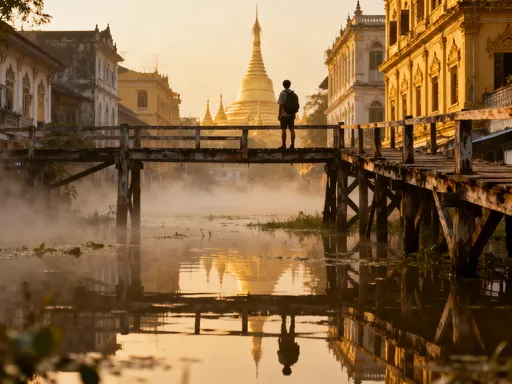
Markets in these areas reflect the aquatic lifestyle. In Twante, vendors arrive by canoe, loading their boats with fruits, fish, and handmade pottery. Buyers wade through shallow water or balance on planks to reach the stalls. Even schoolchildren adapt: in some villages, students walk on narrow wooden bridges to reach classrooms, their backpacks held high above splashing water. These scenes are not signs of hardship, but of resilience and normalcy. For residents, life with water is not exceptional—it is simply life.
Visitors to these areas should approach with respect and awareness. While boat tours are available and offer a unique perspective, it’s important to avoid intruding on private property or disrupting daily routines. Photography should be done discreetly and with permission. The beauty of these communities lies not in their novelty, but in their quiet dignity and resourcefulness. To witness life on the water is to see how Yangon’s people have learned to live with, rather than against, the land’s natural rhythms.
Urban Escalators: Navigating Elevation in Daily Commutes
Moving through Yangon means constantly adjusting to changes in elevation. Unlike grid-based cities with uniform street levels, Yangon’s terrain rises and falls in subtle but significant ways. In downtown, pedestrians climb short staircases to enter railway stations or cross busy intersections. On the approach to Shwedagon, buses slow as they ascend the steep slope of Bahan Road, their engines straining against the incline. In residential areas like Mayangon or Tamwe, footpaths wind up gentle hills, shaded by mango and tamarind trees.
These elevation shifts affect transportation efficiency. Public buses, already crowded, must navigate narrow, winding roads with sudden drops or rises. Drivers develop a keen sense of the city’s topography, knowing which routes are best avoided during heavy rain, when drainage becomes an issue. For pedestrians, especially the elderly or those with mobility challenges, the lack of elevators or ramps in many public buildings can make travel difficult. Yet locals adapt with practical solutions—using walking sticks, forming informal support groups, or simply allowing more time for journeys.
One of the most striking examples of elevation-based navigation is the footpath network leading to monasteries and pagodas. These staircases, often hundreds of steps long, are maintained by local communities and lined with shaded rest areas. Vendors sell water, snacks, and umbrellas at intervals, catering to both pilgrims and tourists. The physical effort required to climb these paths is part of their purpose—encouraging mindfulness, patience, and a sense of accomplishment.
For urban planners, the challenge is to make the city more accessible without flattening its character. Recent infrastructure projects have included the installation of handrails, improved lighting on staircases, and the construction of covered walkways. While elevators or escalators remain rare, there is growing recognition of the need for inclusive design. In the meantime, Yangon’s residents continue to move through their city with a rhythm shaped by its hills and hollows—a daily dance with the land itself.
Green Resilience: Parks and Wetlands as Terrain Protectors
Amid Yangon’s urban sprawl, green spaces serve as both recreational oases and vital environmental safeguards. Kandawgyi Lake and Inya Lake are not just scenic landmarks—they are integral parts of the city’s hydrological system. These large water bodies absorb excess rainfall, reduce pressure on drainage networks, and help prevent flash flooding in surrounding neighborhoods. During the monsoon, their water levels rise visibly, acting as natural reservoirs that slowly release water back into the river system.
Surrounding these lakes are parks and wetlands that further enhance their protective function. Vegetation along the banks stabilizes soil, filters runoff, and provides habitat for birds and aquatic life. In Kandawgyi, the adjacent park is a popular spot for morning walkers, families, and photographers, while Inya Lake’s quieter shores attract readers and meditators. These spaces are not only beautiful but functional—living infrastructure that supports both people and the environment.
However, these areas face ongoing threats from encroachment, pollution, and inadequate maintenance. In recent years, conservation groups and local authorities have launched initiatives to restore native plants, clean waterways, and raise public awareness. Community clean-up events, tree-planting drives, and educational programs in schools emphasize the importance of preserving these green zones. Signage around the lakes reminds visitors not to litter, feed the fish, or disturb the birds.
The long-term sustainability of Yangon depends on protecting these natural buffers. As climate change increases the frequency and intensity of rainfall, the role of lakes and wetlands becomes even more critical. Urban development must balance growth with environmental stewardship, ensuring that new construction does not compromise the city’s ability to manage water. By valuing these green spaces not just for their beauty but for their resilience, Yangon can build a safer, more sustainable future for all its residents.
Traveling With Awareness: How Visitors Can Respect the Land
Exploring Yangon’s diverse terrain requires more than a good map—it demands mindfulness and respect. The best time to visit is during the dry season, from November to February, when water levels are low, roads are clear, and the weather is mild. Travelers should pack appropriate footwear: sturdy walking shoes for temple visits, waterproof sandals for rainy areas, and slip-resistant soles for wet or uneven surfaces. Sun protection is also essential, as shade can be sparse in open areas.
When visiting elevated religious sites like Shwedagon Pagoda, visitors must follow local customs. Shoes must be removed before ascending, and clothing should be modest—covering shoulders and knees. It’s important to stay on designated paths, avoid touching religious artifacts, and refrain from loud conversations. Photography is generally allowed, but flash should be avoided near prayer areas. These practices are not just rules—they are signs of respect for the spiritual significance of the space.
In flood-prone neighborhoods, visitors should be especially considerate. Boat tours should be arranged through reputable operators who work with local communities. Staying on marked walkways, avoiding private property, and asking permission before taking photos help ensure that tourism supports rather than disrupts daily life. It’s also wise to check water levels and weather forecasts before planning excursions to low-lying areas, as conditions can change quickly during the monsoon.
Ultimately, the most meaningful way to experience Yangon is to travel with curiosity and humility. The city’s terrain—its hills, waters, and hidden layers—invites slow exploration and deep observation. By moving gently through its spaces, listening to its rhythms, and honoring its people, visitors can connect with Yangon not just as a destination, but as a living, breathing place shaped by centuries of harmony between land and life.
Yangon’s terrain tells a story of resilience, adaptation, and harmony between people and place. It’s not just about seeing the sights—it’s about feeling the ground beneath your feet shift, learning from centuries of coexistence with water, height, and history. To truly know Yangon, you must go beyond the map and experience its soul—layer by layer.