Whispers of Winter: Where Culture Meets Wild Beauty in Saint Petersburg
Have you ever walked through a city where frost paints the canals and every bridge feels like a poem? Saint Petersburg isn’t just palaces and museums—its true soul lives in the silent snowscapes, frozen rivers, and golden light that spills across the Neva. I never expected nature and culture to blend so perfectly. This is more than a destination; it’s a feeling, quiet and unforgettable. In winter, the city becomes a place of hushed elegance, where snow blankets baroque domes and the river slows beneath a sheet of ice. Here, nature does not retreat behind architecture—it walks beside it, shaping the rhythm of life, art, and memory. To understand Saint Petersburg is to feel its seasons breathe.
The City That Defies Seasons
Situated at the eastern edge of the Baltic region, where the Neva River spills into the Gulf of Finland, Saint Petersburg exists in a delicate balance between land and sea, warmth and cold. Its geographic position—just south of the Arctic Circle—gives it a climate of extremes, yet also of poetic transitions. The city experiences long, dim winters and luminous summers, where the sun barely sets during the famous White Nights in June. These natural rhythms are not just meteorological quirks; they shape the very identity of the city. Residents speak of winter not as an obstacle but as a season of intimacy and reflection, when the world slows and beauty becomes more deliberate.
Founded by Peter the Great in 1703, Saint Petersburg was built on marshland wrested from the sea, making it a testament to human ambition in dialogue with nature. Floods have historically shaped its development, and the city has adapted with raised embankments and flood barriers. Yet even today, the water remains a presence—felt in the damp air, seen in the shimmer of canals, heard in the creak of ice in winter. The seasons dictate not only how people dress and move but also how art is displayed, when gardens bloom, and when bridges open for river traffic. This is a city where nature is not tamed but negotiated with, respected, and even celebrated.
The White Nights, lasting from late May to mid-July, transform the city into a realm of perpetual twilight. Streets remain bathed in soft, golden light long after midnight, and cultural events such as the Stars of the White Nights festival at the Mariinsky Theatre draw audiences into evenings that feel timeless. In contrast, winter brings a stillness that is equally profound. From December to March, daylight is brief, but the quality of light—pale and slanting—lends a quiet drama to the city’s architecture. Snow reflects the glow of streetlamps, turning avenues into corridors of gold. These seasonal shifts are not mere backdrops; they are active participants in the city’s story, shaping its mood, its art, and its soul.
Winter’s Embrace: A Landscape Transformed
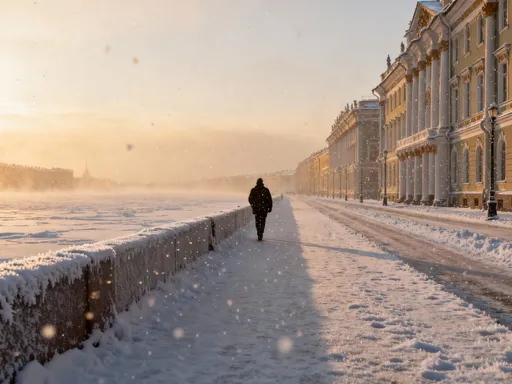
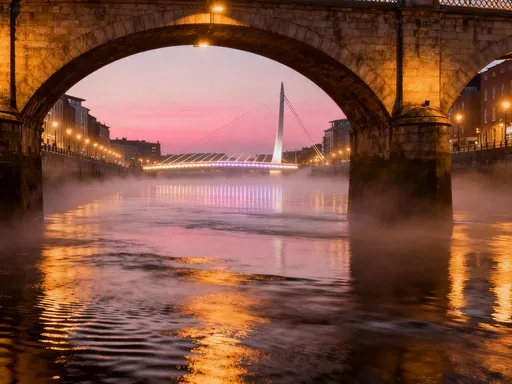
When winter arrives in Saint Petersburg, the city undergoes a metamorphosis. Snow falls gently over rooftops, softening the sharp lines of neoclassical facades and draping domes in white. The Neva River, usually a steady flow of dark water, freezes into a vast expanse of ice, cracked and layered like ancient porcelain. Embankments become silent corridors, and bridges—often illuminated at night—stand like sentinels over a sleeping city. The sound of footsteps on fresh snow is one of the season’s quietest pleasures, a reminder of how winter invites slowness, introspection, and presence.
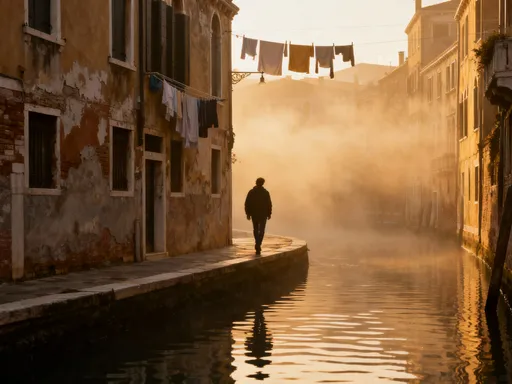
The visual language of winter here is one of contrast and clarity. Black iron railings stand out against snow-covered paths, and the golden spire of the Admiralty cuts through the pale sky like a needle. In the early morning, mist rises from the edges of the ice, creating fleeting veils that drift across the river. At dusk, the city lights come alive—not with the garishness of neon, but with a warm, amber glow that feels intimate and enduring. The Winter Palace, lit from below, appears to float above the snow, its green and white façade glowing with a regal calm.
For visitors, some of the most powerful moments come from stillness. Standing on the Palace Embankment, looking across the frozen Neva toward Vasilievsky Island, one can feel the weight of history and nature merging. The Summer Garden, usually bustling in summer, becomes a hushed sanctuary where snow-laden trees arch over pathways like frozen lace. Even the canals, often associated with gondolas in other cities, take on a Nordic stillness, their waters sealed beneath ice. These are not postcard views to be rushed through, but spaces to be lingered in, absorbed, and remembered. The magic lies not in spectacle, but in the quiet details—the way light catches a frost-covered statue, or how silence amplifies the distant chime of a church bell.
The Neva River: Lifeblood of the City’s Natural Rhythm
The Neva River is the central artery of Saint Petersburg, both geographically and symbolically. At just 74 kilometers long, it is one of the shortest major rivers in Europe, yet it carries immense cultural and historical weight. It flows from Lake Ladoga, the largest lake in Europe, through the city, and into the Gulf of Finland. Its waters have carried trade ships, military vessels, and generations of dreams. The city was built along its banks, with palaces and fortresses rising from its shores, and today, its presence is felt in every district.
Seasonally, the Neva is in constant dialogue with the climate. In spring, the ice breaks in a dramatic event known as the ice drift, when massive floes collide and swirl in the current. This natural spectacle, while no longer accompanied by public festivals, remains a powerful reminder of the river’s wildness. In summer, the river is busy with tour boats and ferries, its surface reflecting the city’s grandeur. But in winter, the Neva transforms again—its flow slows, then stops, as temperatures drop and the surface freezes solid.
When conditions are safe, locals sometimes walk on the frozen sections of the river, particularly near the Alexander Nevsky Lavra or along quieter stretches beyond the city center. This is not a tourist attraction with marked paths or rentals, but a quiet, spontaneous tradition—people strolling hand in hand, children sliding on the ice, elders pausing to look out over the white expanse. From bridges like the Lieutenant Schmidt Bridge or the Palace Bridge, the view of the frozen Neva is panoramic and humbling. The river, usually in motion, becomes a still mirror of the sky, its surface etched with cracks and ridges that tell the story of shifting temperatures.
The Neva’s rhythm is embedded in daily life. Residents check weather reports not just for snowfall, but for ice thickness and bridge openings. In summer, the lifting of drawbridges at night is a ritual that disrupts traffic but enchants onlookers—boats passing beneath illuminated arches, the city pausing for a moment of maritime grace. In winter, the absence of bridge lifts speaks to the river’s dormancy. Yet even then, the Neva is never truly asleep. It breathes beneath the ice, and its presence is felt in the damp chill of the air, the echo of footsteps on stone, and the way light dances across snow-covered banks.
Parks and Gardens: Green Sanctuaries in an Urban Frame
Amid the grandeur of palaces and canals, Saint Petersburg’s parks and gardens offer essential respites—carefully designed spaces where nature and human artistry coexist. These green sanctuaries were not afterthoughts but integral to the city’s original vision. Influenced by French and Italian garden design, they blend symmetry, sculpture, and water features with the realities of the northern climate. The result is a series of living landscapes that change dramatically with the seasons, each phase revealing a new dimension of beauty.
The Summer Garden, founded in the early 18th century, is perhaps the most iconic. Enclosed by a wrought-iron fence and lined with linden and chestnut trees, it was designed as a place of leisure and contemplation. In late spring, lilacs bloom in purple waves, and fountains play in the central alley. By autumn, the leaves turn gold and russet, carpeting the paths in soft decay. But in winter, the garden takes on a different character—silent, monochrome, and deeply serene. Statues, usually surrounded by flowers, stand cloaked in snow, their faces softened by frost. The fountains are still, their basins frozen, yet the garden retains its dignity, as if paused in time.
Alexander Park, located near the Moscow Railway Station, offers a more open, accessible experience. Once part of the Tsarskoye Selo estate, it now serves as a public space for walking, skating, and quiet reflection. In winter, temporary ice rinks appear, and families gather to skate beneath the glow of streetlamps. The park’s proximity to the city center makes it a popular escape without requiring long travel. Similarly, the Yusupov Garden, nestled behind the Moika Palace, is a smaller, more intimate space. Its compact layout and ornamental details make it a favorite for photographers and those seeking a moment of calm.
These gardens are not merely decorative. They serve as lungs for the city, filtering air and offering psychological relief from urban density. For residents, they are places to walk the dog, meet friends, or sit on a bench with a book. In every season, they remind people of nature’s cycles—of growth, rest, and renewal. Their design reflects an 18th-century ideal of harmony, where order and wildness are not opposed but balanced. Even under snow, the geometric patterns of paths and alleys remain visible, a testament to human intention meeting natural change.
Beyond the Center: Nature on the City’s Edge
While the historic center of Saint Petersburg captivates with its architecture, the city’s true natural depth lies beyond the postcard views. On its outskirts, where urban density thins, the landscape opens into forests, wetlands, and coastal stretches that feel worlds away from the imperial grandeur. These areas are not hidden secrets, but accessible escapes where the rhythm of nature takes precedence over human design.
Yelagin Island, situated in the Neva delta, is one such refuge. Part of the larger Central Park of Culture and Recreation, it features meadows, groves, and walking paths that follow the shoreline. In winter, the island becomes a place of quiet beauty—snow-covered trees lean over frozen ponds, and the sound of the city fades behind layers of ice and silence. It is not uncommon to see locals walking dogs, taking photos, or simply standing at the water’s edge, watching the light shift on the ice. The island’s manor house, once a summer residence, adds a touch of history without overwhelming the natural setting.
The Lakhta coastline, stretching along the Gulf of Finland to the northwest, offers a different kind of experience. Here, the Baltic Sea meets rugged shores, and wind-swept dunes give way to pine forests. In winter, the coast is often blanketed in snow, and the sea, when not frozen, churns with cold, gray waves. It is a place of elemental power, where one can feel the vastness of the northern landscape. Birdwatchers visit in spring and autumn to spot migratory species, but even in winter, the area holds a stark beauty—gulls circling above the waves, frost clinging to reeds, and the occasional track of a fox in the snow.
The Neva delta itself is a complex network of channels, islands, and wetlands that few tourists explore. Yet it is here that the river truly meets the sea, and where natural processes unfold with little interference. In spring, melting snow causes localized flooding, transforming low-lying areas into temporary marshes teeming with life. In winter, the delta freezes unevenly, creating mosaics of ice and open water that attract hardy waterfowl. These areas are not developed for tourism, but they are reachable by public transport and offer authentic encounters with the region’s ecology. They remind visitors that Saint Petersburg is not just a city of palaces, but a place rooted in a living, breathing landscape.
Culture Woven into the Wild
In Saint Petersburg, nature is not separate from culture—it is its muse. The city’s artists, writers, and composers have long drawn inspiration from its skies, rivers, and seasons. The melancholy beauty of winter, the fleeting glow of the White Nights, the restless energy of the Neva—all have found expression in creative works that define Russian cultural identity.
Pyotr Ilyich Tchaikovsky, born in the region, often composed with the northern light and weather in mind. His symphonies and ballets—particularly “The Nutcracker” and “Swan Lake”—capture the elegance and tension of winter, where beauty and danger coexist. The slow, sweeping strings evoke snowfall, while sudden crescendos mirror the crack of ice or the rush of wind. His music, frequently performed at the Mariinsky Theatre, feels inseparable from the city’s atmosphere.
Anna Akhmatova, one of Russia’s greatest poets, lived much of her life in Saint Petersburg and wrote extensively about the Neva. Her poems speak of the river as a witness to history, love, and loss. In “Requiem,” she references the cold, the silence, and the waiting—emotions amplified by the city’s winter landscape. Her words resonate with those who have stood on the embankment, feeling the wind off the water and the weight of memory.
Painters like Ilya Repin and Ivan Aivazovsky depicted the Neva and the Gulf of Finland with dramatic realism, capturing the play of light on water, the texture of storm clouds, and the solitude of winter shores. Their works, displayed in the Russian Museum and the Hermitage, are not just artistic achievements but records of the city’s natural soul. Even today, local artists set up easels in the Winter Garden or along the Fontanka Canal, translating the season’s light into color and form.
Theater and literature, too, reflect the city’s climatic rhythm. Plays performed in winter often carry a sense of introspection, while summer festivals embrace the energy of the White Nights. Museums curate exhibitions that respond to the seasons—light installations in winter, open-air sculpture shows in summer. This deep integration means that to experience Saint Petersburg’s culture is to experience its nature. They are not two separate realms, but threads of the same fabric.
Traveler’s Mindset: How to Truly See Saint Petersburg’s Nature
To appreciate Saint Petersburg’s natural beauty, one must adopt a traveler’s mindset rooted in patience, preparation, and presence. This is not a city to be rushed through on a checklist tour. Its magic reveals itself slowly—in the way morning fog lifts from the Neva, or how twilight lingers in a quiet courtyard. The most meaningful experiences come not from ticking off landmarks, but from allowing time and space for observation.
Dressing appropriately is essential, especially in winter. Layers, insulated boots, and windproof outerwear make extended walks possible and comfortable. The cold is not an enemy but a condition to be respected. With the right clothing, even a January afternoon can become a pleasure—steam rising from a cup of tea, cheeks flushed from the wind, breath visible in the air.
Timing visits to align with light conditions enhances the experience. In winter, the best light occurs in the late afternoon, when the sun, though low, casts long shadows and warms the facades of buildings. Sunrise and sunset over the Winter Canal or the Church of the Savior on Spilled Blood are particularly moving. In summer, the White Nights offer extended hours of soft illumination, ideal for evening walks along the embankments.
Public transportation—particularly trams and metro lines—provides efficient access to both central and peripheral areas. But walking remains the most rewarding way to absorb the city’s atmosphere. Skipping the sightseeing buses in favor of foot travel allows one to notice details: frost patterns on windows, the sound of ice underfoot, the scent of pine from a park. It also enables spontaneous discoveries—a hidden courtyard, a local bakery, a view of the river from an unexpected angle.
Finally, visitors should embrace slowness. Waiting for the fog to clear, sitting on a bench to watch the ice form, or returning to the same spot at different times of day can yield deeper understanding than visiting ten museums in a row. Respect for the environment—staying on paths, not disturbing wildlife, avoiding loud behavior in quiet areas—ensures that these spaces remain serene for all. The goal is not to conquer the city, but to listen to it, to feel its breath, and to leave with a quiet sense of connection.
A City That Breathes With the Seasons
Saint Petersburg is not a monument frozen in time, but a living city that pulses with the rhythm of nature. Its greatness lies not only in its palaces, museums, or history, but in the harmony between human creation and the natural world. From the frozen Neva to the snow-laden gardens, from the White Nights to the quiet winters, the city teaches a profound lesson: that beauty emerges not from control, but from coexistence. Here, culture does not dominate nature—nor does nature overwhelm culture. Instead, they intertwine, each enhancing the other.
To visit Saint Petersburg is to witness this dialogue. It is to walk through streets where every season tells a story, where light and water shape memory, and where silence can be as powerful as music. It is to understand that a city can be both grand and intimate, historic and alive. The experience lingers not in photographs, but in the feeling of cold air on the skin, the sound of footsteps on snow, the sight of a single lamp glowing on a dark embankment.
For those willing to slow down, to dress warmly, and to look beyond the obvious, Saint Petersburg offers a rare gift: the chance to see a city not as a collection of sights, but as a breathing, changing landscape. It invites travelers to become part of its rhythm, to walk with the seasons, and to carry home not just memories, but a deeper sense of wonder. In the end, it is not the monuments that endure in the mind, but the whispers of winter—and the quiet understanding that nature, in its stillness, speaks the loudest.