You Won’t Believe What Kolkata’s Architecture Just Showed Me
Walking through Kolkata feels like flipping through a living history book written in brick, stone, and sunlight. I didn’t expect to be so moved by buildings—but here, colonial grandeur meets quirky local reinvention in ways that stop you mid-step. From Victorian masterpieces to hidden courtyards buzzing with life, every corner tells a story. This city doesn’t just preserve architecture—it breathes into it, reshapes it, lives with it. The walls whisper of empire, devotion, and everyday resilience, layered like the peeling paint on century-old facades. What you see isn’t frozen in time; it’s evolving, responding to the rhythm of street vendors’ calls, children’s laughter in alleyways, and the slow creep of vines along wrought iron railings. Kolkata’s architecture is not a museum display. It is alive.
First Impressions: A City That Talks Through Its Walls
Arriving in Kolkata, one might expect chaos—and indeed, the city pulses with energy that feels unrestrained, even overwhelming. The honking of rickshaws, the swirl of street food smoke, and the constant motion of pedestrians create a sensory storm. Yet, amid this apparent disorder, there is an unexpected harmony in the city’s built environment. The first glimpse of tree-lined avenues like AJC Bose Road or the quiet elegance of Alipore’s bungalows reveals a different narrative—one of deliberate design, historical continuity, and quiet dignity. Unlike cities that erase their past for glass towers, Kolkata wears its history on its sleeves, sometimes frayed at the edges, but always present.
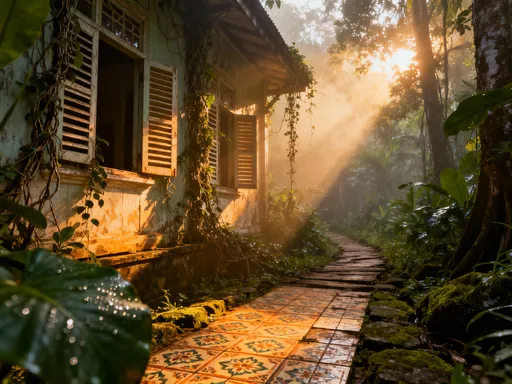
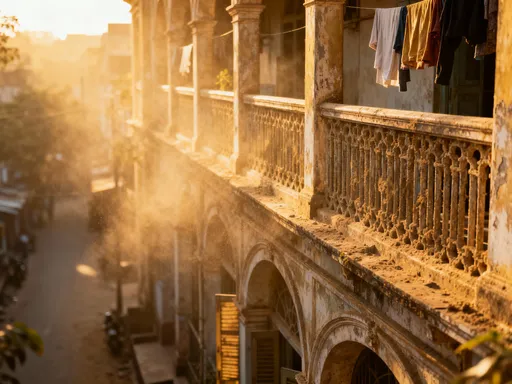
The architectural fabric of the city unfolds gradually, rewarding those who walk slowly and observe closely. In neighborhoods such as Bhowanipore or Shyambazar, colonial-era facades stand shoulder to shoulder with modern apartments, yet the transition feels organic rather than jarring. Ornate cornices, stained glass windows, and cast-iron grilles suggest a time when craftsmanship was central to urban life. Even buildings in disrepair carry a certain grace—peeling stucco exposes layers of color like archaeological strata, each coat a chapter in the city’s long story. There is poetry in the imperfection, a beauty born not from preservation but from endurance.
What strikes most is how architecture here seems to participate in daily life rather than merely frame it. A balcony isn’t just an architectural feature; it’s where an elderly woman sips her morning tea, watching the world awaken. A colonnaded veranda shelters a bookseller’s stall on College Street, merging intellectual tradition with physical space. These interactions transform buildings from static objects into living participants in the city’s rhythm. The emotional atmosphere is almost theatrical—every street corner feels like a stage set waiting for its next scene, rich with memory and possibility.
The British Legacy: Marble Floors and Forgotten Balconies
Kolkata’s colonial heritage remains one of its most visible and evocative architectural layers. As the former capital of British India until 1911, the city became a canvas for imperial ambition, expressed through grand public buildings designed to impress and endure. Among them, the Victoria Memorial stands as both a monument and a paradox—a gleaming white marble tribute to empire, now repurposed as a museum that educates visitors about the very history it once glorified. Its domes and colonnades reflect a blend of Mughal and European styles, a deliberate fusion meant to signal British authority while acknowledging local aesthetics. Today, it glows under floodlights at night, surrounded by manicured gardens, a serene presence in the heart of a bustling metropolis.
Not far away, the Writers’ Building, once the administrative nerve center of British rule, continues to serve as the state secretariat. Its elongated façade, adorned with rows of arched windows and intricate stonework, speaks of Neoclassical precision tempered with Indian craftsmanship. Stepping inside, one hears echoes in the marble-floored halls, sunlight filtering through tall windows onto spiral staircases that have borne the footsteps of generations. Yet, there is also a quiet melancholy in these spaces—the weight of history, the fading grandeur, the sense that these buildings have outlived the ideologies that shaped them.
Similarly, the Kolkata High Court, with its red-and-white Gothic Revival exterior, looms over the city’s legal landscape both literally and symbolically. Turrets, pointed arches, and stained glass evoke a medieval European cathedral, yet the building functions in a distinctly Indian context, where justice is debated in Bengali, Hindi, and English. These colonial structures were designed to convey permanence and order, but time has softened their edges—cracks in the stonework, ivy creeping up pillars, paint flaking from wooden doors. They are no longer symbols of unchallenged power but relics of a complex past, respected not for what they represented then, but for what they mean now.
Beyond the Postcards: Hidden Courtyards and Forgotten Mansions
Away from the postcard-perfect landmarks lies a quieter, more intimate side of Kolkata’s architectural soul—the world of *rajbari* mansions and *bhadralok* homes. These residential structures, often tucked behind unassuming gates in narrow lanes, reveal a domestic architecture shaped by tradition, climate, and social values. The *rajbari*, once the residence of landed aristocracy, typically centers around a large courtyard—a private oasis where family life unfolds under open sky. High walls shield this inner world from the street, creating a sanctuary of stillness amid urban noise.
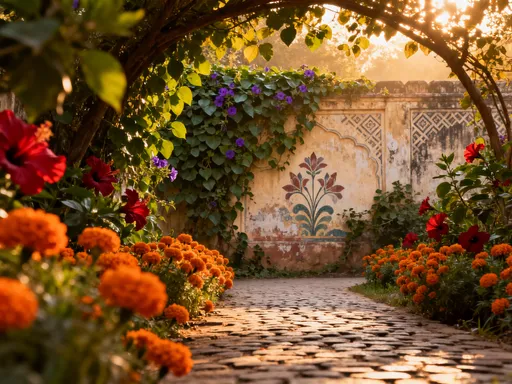
Exploring one such home in North Kolkata, one is struck by the interplay of light and shadow throughout the day. Morning sun spills into the courtyard, illuminating frescoes on the walls—mythological scenes painted in faded ochres and blues. By afternoon, deep eaves cast long shadows, cooling the interior spaces naturally in a city where summers are long and intense. Wooden shutters, carved with floral motifs, are thrown open to catch the breeze, while overhead, terracotta roof tiles absorb heat during the day and release it slowly at night. These are not merely aesthetic choices; they reflect centuries of adaptation to Bengal’s humid subtropical climate.
What makes these homes truly remarkable is how they continue to be lived in, often by multiple generations. A grandmother sits near a veranda knitting, while grandchildren play cricket in the courtyard using a tennis ball. A priest prepares for a household ritual in a small prayer room adorned with marigolds. The scent of mustard oil and cumin lingers from the kitchen, where meals are still cooked on clay stoves. Decay and daily life coexist—plaster crumbles near the ceiling, yet fresh paint marks recent repairs. These homes are not preserved as museums; they are inhabited, cherished, and continuously adapted. Their authenticity lies in their impermanence, in the fact that they are not frozen in time but moving gently forward with their families.
How Religious Diversity Built a City of Temples, Mosques, and Churches
Kolkata’s skyline tells a story of religious pluralism written in stone, brick, and terracotta. Unlike cities where one faith dominates the architectural landscape, Kolkata’s spiritual identity is fragmented—and enriched—by the coexistence of Hindu temples, Islamic mosques, Christian churches, and even Jain temples and synagogues. Each community has contributed its own visual language, creating a skyline that is diverse, layered, and deeply symbolic.
The Dakshineswar Kali Temple, located on the eastern banks of the Hooghly River, exemplifies traditional Bengali temple architecture. Its central spire, or *shikhara*, rises in a curved rekha-deul form, crowned with a golden kalasha (finial). The temple complex includes 12 identical Shiva temples aligned in a row, their surfaces covered in intricate terracotta panels depicting scenes from the epics. Built in the 19th century by Rani Rashmoni, the temple was both a religious offering and a bold assertion of regional identity. Even today, the sound of bells and devotional songs drifts across the river, blending with the call to prayer from nearby mosques.
In contrast, St. Paul’s Cathedral in the heart of the city reflects the Anglican presence with its Gothic Revival spire piercing the sky. Constructed in the late 1800s, its sandstone walls, pointed arches, and stained glass windows create an atmosphere of solemn beauty. Inside, sunlight filters through blue and red glass, casting colored patterns on the wooden pews. Yet, this is not a foreign import untouched by local context—Bengali artisans contributed to its carvings, and the cathedral now hosts multilingual services, reflecting the city’s evolving Christian community.
Equally significant is the Nakhoda Mosque, one of the largest in India, whose grand domes and minarets dominate the Chitpur Road skyline. Inspired by Mughal architecture, particularly the Jama Masjid in Delhi, it serves as a center for Islamic life in Kolkata. Every Friday, hundreds gather for congregational prayers, the courtyard filling with devotion and community. What is remarkable is how these different places of worship exist in close proximity, sometimes within walking distance of one another, without conflict or erasure. Their architectural diversity is not a sign of division but of harmony—a city where faith shapes form, and form reflects unity in diversity.
The Street as Designer: How Daily Life Reshapes Buildings
If Kolkata’s architecture has a genius, it lies not in formal design but in informal adaptation. The city’s buildings do not merely house life—they are reshaped by it. Over decades, residents and shopkeepers have transformed static structures into dynamic extensions of street life. Windows become shopfronts, balconies double as storage spaces, and stairwells serve as gathering spots for neighbors. This organic evolution, unregulated and unplanned, reveals a kind of grassroots urbanism that prioritizes function, community, and survival over aesthetics or preservation dogma.
Nowhere is this more evident than on College Street, home to the world’s largest secondhand book market. Here, century-old buildings with crumbling cornices and weathered facades now host hundreds of tiny bookstalls. What were once residential rooms have been converted into archives of knowledge, their windows removed to display stacks of yellowed textbooks, literary classics, and academic journals. Students, scholars, and curious browsers weave through narrow passages between stalls, creating a living library under the open sky. The architecture did not anticipate this use, yet it accommodates it effortlessly—proof of its flexibility and resilience.
Likewise, in areas like Chandni Chowk and Bowbazar, commercial needs have redefined building use. Ground floors are almost universally dedicated to retail—saris draped over mannequins, electronics displayed behind glass, sweets arranged in colorful rows. Upper floors may still house families, but the boundary between public and private has blurred. Murals, hand-painted signs, and neon lights cover façades, turning buildings into canvases of commerce and culture. Even utility elements—exposed pipes, electrical wires, metal grilles—are incorporated into the visual language of the street, adding texture and rhythm to the urban fabric.
This adaptive reuse is not random; it follows patterns of need, tradition, and ingenuity. A tailor works from a corner room lit by natural light, a tea stall operates from a converted doorway, a repair shop uses a sidewalk as its workshop. These interventions are temporary yet enduring, informal yet essential. They reflect a deep understanding of space—not as something to be controlled, but as something to be negotiated, shared, and reinvented daily. In this way, Kolkata’s people are the true architects of their city.
Why You Should Visit Now: Preservation Efforts and Rising Awareness
Kolkata’s architectural heritage is at a crossroads. Many buildings, especially private residences and lesser-known landmarks, are in decline due to aging infrastructure, lack of maintenance, and economic pressures. Rising land values tempt owners to demolish old structures in favor of modern high-rises, threatening the city’s historic character. Yet, there is also growing awareness of what is at stake—and a quiet but determined movement to protect and revitalize Kolkata’s built legacy.
Organizations such as the Indian National Trust for Art and Cultural Heritage (INTACH) Kolkata Chapter have been instrumental in documenting endangered buildings, advocating for conservation policies, and raising public awareness. Through heritage walks, lectures, and publications, they invite residents and visitors alike to see the city with fresh eyes—to appreciate the craftsmanship in a wrought-iron railing or the historical significance of a forgotten mansion. These efforts do not seek to freeze the city in time but to ensure that change happens thoughtfully, with respect for what came before.
Community-led initiatives are also making a difference. In neighborhoods like Shobhabazar and Kumartuli, local residents have formed heritage groups to clean, repair, and celebrate their surroundings. During festivals like Durga Puja, entire streets are transformed into open-air art galleries, with temporary installations highlighting the beauty of old buildings. These moments of collective pride reinforce the emotional bond between people and place, reminding everyone that preservation is not just about bricks and mortar—it’s about identity and memory.
Tourism, when responsible and mindful, can play a supportive role in this effort. Visitors who come to explore Kolkata’s architecture contribute not only economically but also culturally—they bring attention, appreciation, and sometimes even funding for restoration projects. More importantly, they listen. They pause before a weathered doorway, ask about a family’s history, or photograph a mural with care. This kind of engagement honors the city’s soul. The window to experience Kolkata in its current form—vibrant, fragile, evolving—is still open, but it won’t stay that way forever. Now is the time to visit, to witness, and to support.
Final Thoughts: Architecture That Feels Alive
Kolkata’s architecture does not stand in silence. It speaks—in the creak of a wooden staircase, the echo of footsteps in a marble hall, the murmur of prayers beneath a temple dome. It remembers the weight of empire, the rhythm of rituals, the laughter of children playing in courtyards. But more than memory, it adapts. It allows street vendors to set up shop in its shadows, students to study under its arcades, artists to paint its walls. This is not preservation as perfection; it is preservation as participation.
What makes Kolkata unique is that its buildings are not relics behind glass. They are worn, repurposed, and lived in—proof that heritage need not be static to be valuable. The city’s architectural soul is inseparable from its cultural resilience, its ability to absorb change without losing identity. In a world increasingly dominated by uniform skyscrapers and disposable design, Kolkata offers a different vision—one where history and humanity coexist in imperfect, beautiful harmony.
To travel here is not just to see, but to listen. To walk through its streets is to engage in a dialogue with time, with memory, with the quiet dignity of places that have witnessed much and still have stories to tell. So come—not as a spectator, but as a witness. Let the walls speak. Let the city reveal itself, one crumbling cornice, one sunlit courtyard, one shared moment at a time. Kolkata’s architecture doesn’t just show you the past. It invites you into its present—and its future.