Whispers of the Wild: A Soul-Deep Journey Through Kangaroo Island
Nestled off the southern coast of Australia, Kangaroo Island isn’t just a getaway—it’s a living story of land, culture, and quiet resilience. I went seeking nature, but found something deeper: the heartbeat of a place shaped by fire, sea, and generations of connection to Country. From First Nations heritage to the quiet pride of local makers, this island doesn’t shout—it whispers. And if you listen closely, it changes you. More than a destination, Kangaroo Island offers a rare invitation: to slow down, to witness recovery and renewal, and to engage with a community whose identity is woven into the landscape. This is not tourism as spectacle, but travel as relationship.
Beyond the Brochure: Why Kangaroo Island Feels Different
Kangaroo Island has long been celebrated for its dramatic cliffs, wild coastlines, and abundant wildlife. But what truly sets it apart from other natural destinations is not its scenic beauty alone—it’s the profound sense of stillness and authenticity that permeates every corner of the island. Unlike heavily touristed regions where experiences are packaged and predictable, KI unfolds at its own rhythm. There are no crowds rushing from one photo stop to the next. Instead, travelers are met with open skies, unhurried conversations, and an atmosphere where time seems to stretch rather than contract.
The island’s isolation—just a short ferry ride from the mainland, yet worlds away in spirit—has preserved a way of life that feels increasingly rare. Locals speak with a quiet pride about their home, not because it’s perfect, but because it’s real. They know the seasons by the movement of birds, the bloom of wildflowers, and the return of certain fish to the bay. This deep attunement to nature isn’t romanticized; it’s lived. Visitors often arrive expecting kangaroos and sea lions—and they find them—but what stays with them is the feeling of being somewhere that hasn’t been shaped for show.
What makes Kangaroo Island feel different is its cultural depth. It’s not merely a backdrop of nature; it’s a place where human stories are interwoven with the land. Whether it’s a farmer repairing a fence at dusk, a potter shaping clay from local earth, or a guide sharing stories passed down through generations, the island reveals itself through moments of quiet connection. These are not staged performances but genuine expressions of life on an island that values continuity, care, and community.
The First Peoples’ Legacy: Connecting with Ngarrindjeri and Kaurna Roots
Beneath the surface of Kangaroo Island’s natural beauty lies a much older story—one that begins tens of thousands of years before European arrival. The island is part of the traditional lands of the Ngarrindjeri and Kaurna peoples, whose spiritual and physical connection to Country continues to shape the region’s cultural identity. While colonial history is visible in the architecture and place names, the enduring presence of Aboriginal cultures offers a deeper, more foundational narrative.
Today, visitors have the opportunity to engage with this living heritage through meaningful, community-led experiences. Guided cultural walks, often hosted by Aboriginal elders or knowledge holders, invite guests to walk gently across the land while listening to Dreaming stories that explain the creation of landforms, the behavior of animals, and the cycles of nature. These are not museum recitations but living transmissions of knowledge that have been sustained across generations, even in the face of displacement and disruption.
One such experience takes place near the island’s southern coastline, where a Ngarrindjeri guide shares the significance of the tides, explaining how certain rock pools were once used for gathering food and how specific plants were used for healing. As the wind moves through the coastal grasses, the stories feel inseparable from the landscape. Participants are encouraged to listen, observe, and reflect—not to take photos or record, but to be present. This shift in attention—from consumption to reverence—is where true cultural understanding begins.
These encounters are not about spectacle or entertainment. They are acts of cultural sharing, rooted in trust and respect. For many visitors, especially women in their 30s to 55s who value connection, authenticity, and personal growth, these moments are transformative. They offer a rare chance to step outside the noise of daily life and reconnect with a way of knowing that is holistic, intergenerational, and deeply grounded.
The Spirit of the Locals: Life on Australia’s Galápagos
Kangaroo Island is often compared to the Galápagos for its unique biodiversity, but its true distinction lies in the resilience and spirit of its people. Nowhere was this more evident than in the aftermath of the 2019–2020 bushfires, which burned nearly half the island and devastated wildlife, farmland, and homes. In the face of immense loss, the community responded not with retreat, but with determination, solidarity, and quiet courage.
Families who had lived on the island for generations opened their homes to displaced neighbors. Farmers shared equipment and labor to rebuild fences and restore pasture. Artists and craftspeople turned grief into creativity, using their work to tell the story of recovery. The island didn’t wait for outside saviors—it rebuilt itself, one fence post, one seedling, one conversation at a time. This spirit is not performative; it’s embedded in the culture of self-reliance, mutual care, and deep love for place.
Meet Sarah, a third-generation beekeeper whose hives were destroyed in the fires. Rather than leave, she spent months rebuilding her apiary, working alongside volunteers and scientists to reintroduce native bee species. Today, her honey carries not just the flavor of eucalyptus and tea tree, but the story of renewal. Or consider Tom, a fisherman whose boat was lost to the flames. He rebuilt it by hand, using local timber, and now leads small eco-tours that teach visitors about sustainable fishing and marine conservation.
These stories are not exceptions—they are the norm. On Kangaroo Island, culture isn’t preserved in glass cases. It lives in kitchens where recipes are passed from mother to daughter, in workshops where leather is tanned using traditional methods, and in community halls where music is played on instruments made from salvaged wood. For travelers seeking more than sightseeing, these human connections offer a powerful reminder that resilience is not just about survival—it’s about continuing to create, share, and care, even in the face of loss.
Taste of Place: Food as Cultural Expression
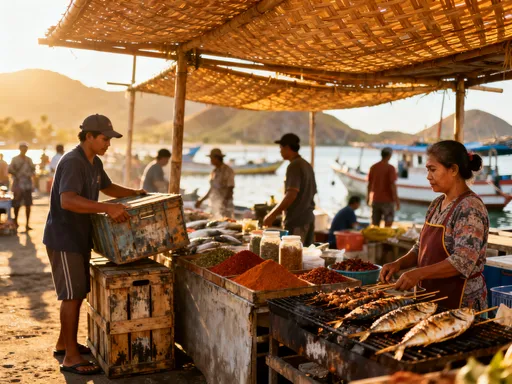
On Kangaroo Island, every meal is an act of storytelling. The food here is not imported or mass-produced; it is grown, harvested, and prepared with intention. From honey harvested from surviving hives to oysters pulled fresh from protected bays, the flavors are unmistakably of this place. To eat on KI is to taste the land, the sea, and the hands that tend them.
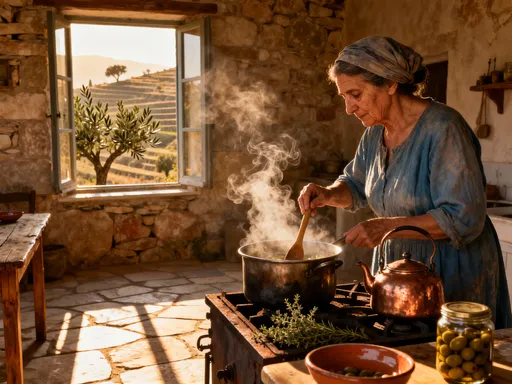
The island’s culinary identity is shaped by both geography and history. Early settlers from Liguria, Italy, brought with them olive-growing traditions that thrive in the Mediterranean-like climate. Today, local groves produce award-winning olive oils infused with native lemon myrtle or smoked salt, each bottle reflecting the terroir and the care of the grower. Visiting a family-run olive press, where generations work side by side, offers more than a tasting—it offers a window into a way of life rooted in patience, seasonality, and craft.
Cheese is another cornerstone of KI’s food culture. At a small dairy outside Kingscote, a mother-daughter team uses milk from their own herd to create soft, ash-ripened cheeses and hard varieties aged in natural caves. The process is slow, the batches small, and the flavors complex—earthy, tangy, sometimes floral. When guests sit down for a tasting under a fig tree, they’re not just sampling cheese; they’re participating in a ritual of care and continuity.
Even the island’s bakeries tell stories. One coastal bakery, rebuilt after the fires, uses flour milled from locally grown wheat and sourdough starters that have been maintained for decades. The bread emerges crusty and fragrant, served with honey harvested from nearby hives. These meals are not rushed. They are savored, shared, and often accompanied by stories—of the storm that knocked out power, of the wallaby that wandered into the garden, of the neighbor who brought over fresh fish “just because.”
For many visitors, especially those who value home, family, and nurturing, this connection between food and culture is deeply resonant. It reminds them that cooking is not just sustenance—it’s love, memory, and identity made tangible. On Kangaroo Island, dining is not an isolated event; it’s a thread in the larger fabric of community and belonging.
Off the Map: Finding Quiet Moments That Matter
Most guidebooks will direct you to Seal Bay, where sea lions bask on the sand, or to Flinders Chase National Park, home of the Remarkable Rocks and Admirals Arch. These are undeniably stunning sites, and they deserve their acclaim. But the soul of Kangaroo Island often reveals itself in the spaces between—the unplanned, unphotographed moments that happen when you wander just a little farther, stay a little later, or simply sit in silence.
Imagine arriving at Snelling Beach before sunrise. The sand is cool underfoot, the air crisp with the scent of salt and seaweed. There is no one else in sight. As the sky shifts from indigo to gold, a pair of white-bellied sea eagles circles overhead, their calls echoing across the water. This is not a staged experience—it’s the island breathing, unobserved, unperformed.
Or consider a quiet walk through a regenerating forest, where young eucalyptus trees rise from blackened trunks. A wallaby pauses at the edge of the path, ears twitching, before vanishing into the underbrush. The ground is soft with ash and new growth. Here, the story of fire and renewal is not told in statistics but felt in the air, seen in the resilience of the land. These moments don’t require tickets or tours. They require only presence.
Another hidden gem is the network of small coves along the north coast, accessible only by local knowledge. Fishermen still use these spots to launch their boats, and on a calm morning, you might see one mending nets by hand, his movements rhythmic and unhurried. If you smile, he might nod, or even share a story about the best time to catch blue warehou. These interactions aren’t transactional; they’re human.
For women who travel not to collect destinations but to collect feelings—of peace, of clarity, of connection—these quiet moments are the true reward. They offer space to reflect, to breathe, to remember what matters. Kangaroo Island doesn’t demand your attention; it invites it. And in that invitation, there is a kind of healing.
Traveling with Respect: How to Be a Cultural Guest
With great beauty comes great responsibility. Kangaroo Island is not a theme park; it is a living, breathing community and ecosystem still recovering from trauma. To visit with integrity means more than following rules—it means cultivating a mindset of reciprocity, humility, and care.
One of the most powerful ways to travel respectfully is to support local businesses. Choose to buy honey from a family apiary, dine at a restaurant that sources ingredients from island farms, and stay in accommodations owned by residents. These choices do more than sustain the economy—they affirm the value of local knowledge and labor. When you sip tea made from native anise myrtle harvested by a Kaurna woman, you’re not just consuming a product; you’re honoring a tradition.
Equally important is respecting the land. Follow fire recovery guidelines—stay on marked trails, avoid restricted areas, and never light fires outside designated zones. Many parts of the island are still regenerating, and a single misstep can disrupt fragile ecosystems. When visiting culturally significant sites, such as Aboriginal heritage areas, do so with reverence. These are not attractions; they are sacred spaces. Listen to local guidance, refrain from touching artifacts, and prioritize learning over photographing.
Perhaps most importantly, practice the art of listening. Ask questions, but don’t demand answers. Share your appreciation, but don’t expect intimacy. The island and its people are not here to perform for you. They are living their lives. Your role is not to extract experiences, but to witness, to honor, and to leave with gratitude.
Respectful travel is not about perfection. It’s about intention. It’s about recognizing that you are a guest in a place with its own rhythms, stories, and boundaries. When approached this way, travel becomes not just enriching, but reciprocal.
The Island That Stays With You: Why Culture Outlasts the Trip
When you return home from Kangaroo Island, you may find that the images that linger are not the most dramatic. You won’t just remember the sea lions or the rock formations. You’ll remember the woman who served you tea with a smile, the fisherman who pointed you to a hidden beach, the guide whose voice softened as he spoke of ancestors. You’ll remember the taste of honey that tasted like sunlight and smoke, the sound of wind through saltbush, the feeling of sand between your toes at dawn.
These are the imprints of culture—subtle, enduring, transformative. Unlike fleeting thrills or checklist tourism, cultural connection leaves a lasting mark on the heart. It changes the way you see not just a place, but yourself. It reminds you of the value of slowness, of listening, of community. It reawakens a sense of wonder that modern life often dulls.
For women in their 30s to 55s—many of whom navigate busy households, caregiving roles, and the quiet search for meaning—Kangaroo Island offers something rare: a space to reconnect with what feels true. It doesn’t offer escape, but reconnection. It doesn’t shout for attention, but whispers with wisdom.
The island does not give up its secrets easily. It asks for time, presence, and openness. But for those willing to listen, it offers a profound gift: the sense of belonging to something larger than oneself. It reminds us that culture is not static—it lives in the hands that shape clay, the voices that sing old songs, the meals shared in silence. It is not preserved; it is practiced.
In a world that often feels fragmented and fast, Kangaroo Island stands as a quiet testament to continuity, resilience, and care. It does not promise transformation—but it makes space for it. And sometimes, that is enough.