Hidden Taverns & Secret Plates: Zakynthos’ Undercover Food Magic
You know that feeling when you stumble upon a place so real, so unfiltered, that it redefines your whole trip? That’s Zakynthos off the postcard path. Beyond the cliffs and blue waters, tucked in sleepy villages and olive-draped hills, are family-run taverns dishing out flavors you won’t find on any tourist menu. This isn’t just dinner—it’s heritage on a plate. I went looking for authenticity and found something rarer: meals that feel like coming home. In an age of curated travel and Instagram-perfect plates, Zakynthos offers a quiet rebellion—a return to food that’s not designed for photos, but for soul. These hidden kitchens don’t advertise, rarely accept credit cards, and may not even have a printed menu. Yet, they serve some of the most honest, flavorful food in the Mediterranean. This is not about fine dining. It’s about real people, real stories, and recipes passed down like heirlooms. Let this be your guide to discovering the island’s truest flavors—one unlisted tavern at a time.
Beyond Shipwreck Beach: Zakynthos’ Culinary Backroads
Zakynthos is best known for Shipwreck Beach, its turquoise cove framed by limestone cliffs, drawing thousands of visitors each summer. But beyond the postcard views and boat tours lies a quieter, deeper version of the island—one shaped by centuries of farming, fishing, and seasonal rhythms. This is where the real story of Zakynthian food begins, not in crowded seaside strips, but in inland villages like Anafonitria, Volimes, and Keri. These places are not hidden because they’re secretive, but because they’ve never needed to be found. Life here moves with the sun and the soil. Roosters call at dawn, goats climb terraced hills, and the scent of woodsmoke lingers in the evening air.
The landscape itself tells the story of the island’s culinary roots. Terraced hillsides, carved by hand generations ago, still grow olive trees, grapevines, and wild herbs. Stone ovens, some centuries old, stand in backyards and communal courtyards, used for baking bread or slow-cooking stews. The air carries the fragrance of thyme, oregano, and sage—plants that grow wild and are gathered by locals for both cooking and healing. This is not agriculture as industry, but as tradition. Every ingredient has a history, a season, and a place.
These villages have preserved traditional cooking methods precisely because they’ve remained outside the tourist mainstream. Without the pressure to cater to mass tourism, families continue to cook the way their grandparents did—using cast-iron pots, clay dishes, and open flames. There’s no need to simplify flavors or shorten cooking times for impatient diners. Meals unfold slowly, often starting with a shared appetizer of olives and cheese, followed by a main dish that’s been simmering for hours. The rhythm of eating mirrors the rhythm of life: patient, deliberate, and deeply connected to place.
For travelers seeking authenticity, the journey begins by leaving the coastal resorts behind. Renting a car and driving inland opens up a different Zakynthos—one where roads narrow into gravel paths, and villages appear suddenly around bends. Start in Anafonitria, a hillside village with a 15th-century monastery and narrow stone alleys. Stop at the village square around noon, when families gather for lunch and the aroma of grilled lamb drifts from open windows. In Volimes, known for its olive oil production, visit during harvest season to see families pressing oil in stone mills, their hands stained green from olives. Keri, near the southern tip of the island, offers panoramic views and a slower pace, where fishermen still mend nets in the shade and tavernas serve what was caught that morning.
The Heartbeat of the Kitchen: Who’s Cooking in Zakynthos?
If Zakynthos has a culinary soul, it lives in the hands of women in their 60s and 70s—mothers, grandmothers, and aunts—who have spent decades perfecting the island’s recipes. These are not celebrity chefs or restaurateurs with branding strategies. They are home cooks whose kitchens double as the heart of village life. Their cooking is not performance; it’s purpose. Every dish carries the weight of memory, shaped by scarcity, celebration, and the need to nourish.
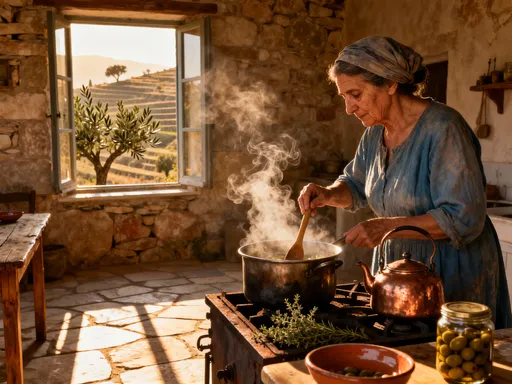
Meet Maria in Volimes, who rises before sunrise to prepare bread in her outdoor oven. Her hands, rough from years of kneading and chopping, move with quiet precision. She grows most of her ingredients in a small garden behind her house—tomatoes, zucchini, capers, and herbs. Her goat, Eleni, provides milk for cheese she makes weekly. When asked about her recipes, she laughs. “I don’t write them down,” she says. “I learned from my mother, and she learned from hers. You just know when it’s right.” This oral tradition is common across the island, where cooking is taught through doing, not measuring.
These women are not just cooks; they are cultural keepers. In times of celebration—weddings, baptisms, Easter—they lead the preparation of large communal meals, often cooking for dozens in outdoor kitchens. Their knowledge extends beyond recipes to preservation: pickling vegetables, curing meats, drying figs, and storing olive oil in clay jars. Their kitchens are filled with jars of homemade goods, each labeled with the season and year. Nothing is wasted. Leftover bread becomes *dakos*, a savory barley rusk topped with tomatoes and cheese. Stale pastries are soaked in syrup for desserts.
Their role in the community goes beyond food. They are confidants, advisors, and the first to offer a meal when someone is grieving or celebrating. A visit to their home often begins with an insistence on feeding you—“You look tired, eat something,” or “You’ve traveled far, you need strength.” Refusing is nearly impossible, and unwise. To accept is to be welcomed. Their pride is not in praise, but in seeing plates emptied. A clean plate is the highest compliment.
What’s on the Plate? Zakynthos’ Undiscovered Flavors
The food of Zakynthos is a reflection of its land and sea, shaped by isolation and self-sufficiency. While mainland Greek cuisine is well-known, the island’s specialties remain largely undiscovered by international travelers. These are not variations of familiar dishes, but unique expressions of local identity. One such dish is *dakos*, a rustic rusk made from barley or wheat, soaked in olive oil and topped with fresh tomato, local myzithra cheese, and a sprinkle of oregano. Unlike the Cretan version, Zakynthian *dakos* is softer, almost porridge-like, and often served as a light lunch with a slice of watermelon on hot days.
Another hidden gem is *stifado me lagoto*—a rich rabbit stew slow-cooked with onions, cinnamon, cloves, and a splash of local wine. The meat, tender and fragrant, falls off the bone after hours of simmering. This dish is rarely found in tourist areas, as rabbit is not commonly farmed for commercial sale. Instead, it’s sourced from hunters or smallholders, making it a seasonal and regional specialty. The use of warm spices reflects Venetian influence, a legacy of centuries of foreign rule that left its mark on the island’s cuisine.
Wild greens, known locally as *horta*, are another staple. Gathered from hillsides and fields, these greens—dandelion, amaranth, and chicory—are sautéed simply in olive oil with a touch of lemon. They are bitter, earthy, and deeply nutritious. In spring, they appear on nearly every table, often served with boiled eggs or feta. The island’s olive oil, particularly from Volimes, is a key ingredient in nearly every dish. Cold-pressed and unfiltered, it has a peppery finish and a golden-green hue, a sign of its freshness and quality.
Festivals bring out the most elaborate dishes, like *pastitsada*, a spiced beef or rooster stew served over thick pasta. This dish is not made lightly—it requires preparation, time, and a reason to celebrate. It’s typically reserved for Easter, weddings, or village feasts. The sauce, rich with tomato, cinnamon, and cloves, is simmered for hours until it thickens into a velvety consistency. Eating *pastitsada* is not just a meal; it’s an event, shared among extended families and neighbors.
And then there is the honey. Keri’s thyme honey is legendary among locals—thick, floral, and slightly herbal. Bees feed on wild thyme that grows in rocky crevices along the southern coast, giving the honey a unique terroir. It’s drizzled over yogurt, used in desserts, or eaten by the spoonful as a tonic. Unlike commercial honey, it crystallizes naturally and has a depth of flavor that store-bought versions can’t match.
Where to Eat Like a Local: The Unlisted Spots
Finding authentic tavernas in Zakynthos requires a shift in mindset. Forget guidebooks and online rankings. The best meals are not found through apps, but through observation, timing, and conversation. These places rarely have websites, social media pages, or even signs. They don’t need them. Their customers are locals, returning visitors, and the rare traveler who stumbles in by chance. The key is knowing what to look for.
Start with the setting. Authentic tavernas are often set in village squares, under grapevines or fig trees, with simple wooden tables and mismatched chairs. The menu, if it exists, is handwritten on a chalkboard in Greek, listing daily specials based on what’s fresh. There’s no English translation, no photos, no prices listed. If you see a menu laminated and translated into five languages, you’re likely in a tourist spot. Cash is almost always required. Credit cards are rarely accepted, and ATMs may be scarce in small villages, so carrying euros is essential.
Timing matters. Many family-run tavernas open only for lunch, closing in the afternoon and reopening for dinner only during peak season. Some serve meals only when the family is home, meaning hours can be unpredictable. The best time to find an open kitchen is between 12:30 and 2:30 p.m., when villagers gather for their main meal. Arriving later may mean a closed door and a note taped to the window.
How do you find these places? Ask at a local bakery. The baker knows everyone. So does the priest, the postman, or the woman selling vegetables in the market. A simple “Parakalo, pou mporo na fago kala?” (“Excuse me, where can I eat well?”) often leads to a warm recommendation and even a phone call to the taverna owner to let them know you’re coming. Follow the locals—when a group of older men walks down a side street at noon, they’re likely heading to their regular spot. Visit village squares during lunchtime. If you see tables set up under a pergola with people eating and laughing, that’s your sign.
How to Connect Through Food: The Unspoken Rules
Dining in a hidden Zakynthian taverna is about more than eating. It’s about participation, respect, and presence. There are no formal rules, but there are unspoken codes that, when followed, transform a meal into a connection. The first is greeting. When you enter, say “Kalimera” (good day) to the host, even if they’re busy. A smile and eye contact go further than any language.
When offered *raki*—a strong, clear spirit made from grape pomace—accept it, even if just a small sip. It’s not about the drink; it’s about hospitality. Refusing can be seen as rejecting the host’s generosity. This gesture often opens the door to conversation, stories, and sometimes an invitation to see the kitchen or taste something not on the menu.
Pace yourself. Meals here are not rushed. Courses arrive when they’re ready, not on a schedule. Start with small plates—olives, tzatziki, fried zucchini—then move to the main dish. Dessert may come hours later, or not at all, unless the host decides you’ve earned it. The goal is not to finish quickly, but to linger, to talk, to enjoy the company as much as the food.
Showing appreciation is subtle. Complimenting the food is good, but better is asking about it. “How do you make this?” or “Where do you get the cheese?” shows genuine interest. If you’re invited into the kitchen, don’t take photos unless invited. Watch, listen, and absorb. These moments are not performances; they’re private, personal.
And sometimes, the meal doesn’t end at the table. It might continue with a walk through the garden, a taste of homemade wine, or a slice of walnut cake wrapped in parchment for the road. These gestures are not for sale. They are gifts, given freely to those who show respect and presence.
From Market to Table: A Day in the Life of Local Ingredients
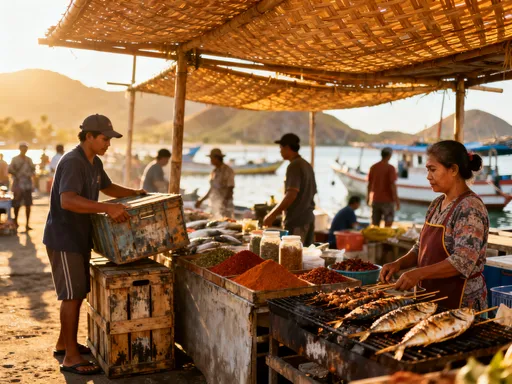
The journey of food in Zakynthos begins long before it reaches the plate. It starts in small village markets, like the one in Lagopodo on Thursday mornings, where farmers set up wooden tables under canvas tents. There’s no plastic packaging, no labels, no barcodes. Tomatoes still have soil on them. Cheese is wrapped in cloth. Fish lies on ice, caught that morning off the southern coast.
Meet Yiannis, a goat herder from the hills above Keri. Every morning, he walks his flock to new grazing grounds, following paths known only to locals. His cheese, made from raw goat’s milk, is sold at the market in small batches. It’s tangy, creamy, and changes flavor with the seasons—milder in spring, stronger in summer when the goats eat wild herbs. He doesn’t pasteurize, doesn’t add preservatives. “The milk is clean,” he says. “The land is clean. Why change it?”
Or take Dimitris, a fisherman from the village of Agios Sostis. At dawn, he returns with a catch of red mullet, bream, and octopus. He sells directly to tavernas, handing over the day’s freshest fish with a nod. “They know what’s good,” he says. “They don’t need me to tell them.” This direct link between producer and cook ensures that ingredients are used at their peak, often within hours of harvest or catch.
Seasonality dictates the menu. In spring, wild greens and artichokes dominate. Summer brings eggplants, peppers, and figs. Autumn is for grapes, olives, and mushrooms. Winter slows the pace, with preserved foods and hearty stews. There’s no demand for out-of-season tomatoes or imported strawberries. The menu changes daily, sometimes hourly, based on what’s available. This is not farm-to-table as a trend, but as a necessity. It’s how people have always eaten here.
Planning Your Own Food-Fueled Detour: Practical Tips for Authentic Dining
To experience Zakynthos’ hidden food culture, planning is important—but not too much. Renting a car is essential. Public transportation is limited, and the best villages are off the main roads. A small, fuel-efficient vehicle is ideal for narrow mountain paths. Don’t rely on GPS alone; carry a paper map and ask for directions. Locals are happy to help, often drawing routes on napkins or walking you to the next turn.
Time your visit around local festivals. These events, often tied to religious holidays, are when the most traditional foods are prepared. Easter, in particular, is a culinary highlight, with lamb roasting on spits, sweet breads baked in wood ovens, and desserts like *loukoumades* served in village squares. Check local church bulletins or ask at your accommodation for festival dates.
Learn a few basic Greek phrases. “Efharisto” (thank you), “Parakalo” (please/you’re welcome), and “Tha ithela” (I would like) go a long way. Even a clumsy attempt shows respect and often earns a smile, a lesson, or an extra spoonful of food.
Be patient. Things move slowly. Orders take time. The kitchen may close early. A dish you were promised might not be ready. This is not poor service; it’s authenticity. These are homes, not restaurants. The food is made when it’s ready, not when you are.
And most importantly, let go of the guidebook. Some of the best meals happen by accident—when you get lost, when you follow a smell, when you accept an invitation from a stranger. These moments can’t be scheduled, but they can be welcomed. Bring curiosity, humility, and an empty stomach.
In the end, the magic of Zakynthos’ hidden taverns is not just in the food, but in the feeling it creates. It’s the warmth of a shared table, the pride in a handmade meal, the quiet joy of being seen and welcomed. These experiences stay with you long after the trip ends, reshaping how you think about travel, connection, and what it means to truly taste a place. So go beyond the beach. Step into the hills. Knock on the door. Say yes to the *raki*. And let the island feed not just your body, but your soul.