How Western Medicine Changed My Recovery Game — And Why Awareness Matters
I used to think rehabilitation was just about waiting to heal. Then I discovered how structured Western medicine approaches—like targeted therapies and science-backed protocols—could actively speed up recovery. It wasn’t magic, but it was effective. This shift didn’t just change my body; it changed my mindset. Learning to understand my condition, treatment options, and my role in healing made me realize: health isn’t something that happens to you—it’s something you participate in.
The Moment Everything Shifted
It started with a fall—nothing dramatic, just a misstep on a wet kitchen floor. But the sharp pain in my lower back didn’t fade. Within days, simple tasks like bending to pick up laundry or standing to stir a pot became unbearable. At first, I assumed time would fix it. I rested, applied heat, and waited. Weeks passed, yet the discomfort lingered, radiating down one leg. Frustration turned to worry. I had always prided myself on being self-reliant, but now I felt helpless. That was my first misconception about recovery: the idea that healing is passive, something the body does on its own if left undisturbed. I believed rest alone would restore me, but inaction was making things worse.
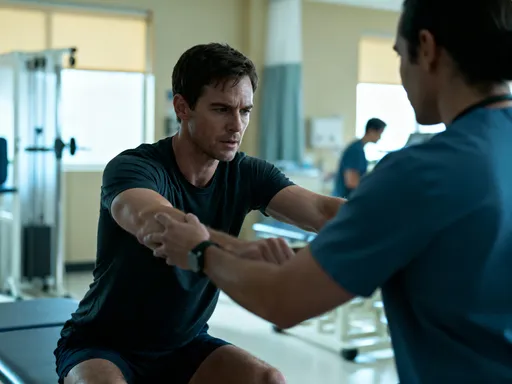
Finally, I made an appointment with a primary care physician. After a physical exam and an MRI scan, I received a diagnosis: a lumbar disc bulge pressing on a nerve root. The doctor didn’t offer a quick fix, but instead referred me to a rehabilitation specialist. That referral marked the turning point. For the first time, I met with a team—a physiatrist, a physical therapist, and a nurse coordinator—who explained not just what was wrong, but how we could address it together. They outlined a personalized recovery plan with clear milestones. There were exercises to strengthen my core, stretches to improve flexibility, and guidance on posture and movement. I was given a timeline, not a guarantee, but a structured path forward. The emotional shift was profound. I wasn’t just waiting anymore. I had a role to play. Healing wasn’t happening to me; I was part of it.
This experience shattered my earlier belief that medical care was only about prescriptions or surgery. I began to see rehabilitation as an active, dynamic process—one that required my engagement. The first few therapy sessions were humbling. Simple movements felt difficult. But with each session, I gained clarity. My pain wasn’t a mystery; it was a signal. And with the right guidance, I could respond to it wisely. The realization that recovery could be guided, not just endured, changed everything.
What Is Western Medicine Rehabilitation? (And Why It’s Different)
Western medicine rehabilitation is a systematic, science-based approach to restoring function after injury, illness, or surgery. Unlike passive recovery methods—such as waiting for symptoms to fade or relying solely on rest—it emphasizes active participation, precise diagnosis, and evidence-driven interventions. At its core, this model treats the body like a complex machine that can be understood, maintained, and repaired using clinical knowledge. It begins with a thorough assessment: imaging, physical exams, and functional tests that pinpoint the source of dysfunction. From there, healthcare providers design individualized treatment plans that evolve as healing progresses.
One of the defining features of Western rehabilitation is its reliance on multidisciplinary coordination. A patient might work with a physiatrist to manage pain, a physical therapist to rebuild strength, an occupational therapist to regain daily function, and possibly a psychologist if chronic pain affects mental well-being. This team-based model ensures that no aspect of recovery is overlooked. Treatments are not one-size-fits-all. For example, two people with the same back injury may receive different exercise regimens based on their age, fitness level, and lifestyle. This level of personalization is made possible by clinical guidelines rooted in decades of medical research.
Contrast this with alternative or informal recovery methods, where advice might come from well-meaning friends, internet forums, or generalized wellness trends. While some complementary approaches can support healing, they often lack the precision and accountability of clinical care. Western medicine rehabilitation emphasizes timing and progression. For instance, starting certain exercises too soon after an injury can delay healing, while waiting too long can lead to stiffness and weakness. The structured nature of medical rehab ensures that interventions are introduced at the right moment, in the right dose, and with proper monitoring.
Another key difference is the use of measurable outcomes. Progress isn’t judged by how someone “feels” alone, but by objective markers—range of motion, strength tests, pain scales, and functional assessments. This data-driven approach allows clinicians to adjust treatments as needed. If a patient isn’t improving as expected, the plan can be revised. This responsiveness increases the likelihood of full recovery and reduces the risk of complications. In essence, Western rehabilitation transforms healing from a guessing game into a guided journey.
Why Awareness Is the Missing Link in Recovery
Despite the availability of advanced medical care, many patients still struggle to recover fully—not because the treatments don’t work, but because they don’t understand them. Awareness, or health literacy, is often the missing piece. When people follow a rehabilitation plan without knowing why certain exercises are prescribed or why rest periods are necessary, adherence tends to drop. They may skip sessions, modify exercises incorrectly, or abandon the plan altogether when progress feels slow. Without understanding, motivation fades.
Consider a common scenario: a patient with shoulder tendinitis is told to perform rotator cuff strengthening exercises three times a week. If they don’t know that these muscles stabilize the joint and prevent further injury, they may see the routine as tedious. But when a therapist explains that weak rotator cuff muscles increase strain on the tendon, making healing harder, the exercises take on new meaning. This understanding fosters consistency. The patient isn’t just moving their arm; they’re protecting their joint and supporting tissue repair. Knowledge transforms compliance into commitment.
The cost of low health awareness can be significant. Studies in rehabilitation medicine show that patients with higher health literacy are more likely to complete their therapy programs and less likely to experience setbacks. They report better pain management, improved function, and greater satisfaction with care. On the other hand, those who lack understanding may overexert themselves too soon, misinterpret normal healing discomfort as a sign of failure, or rely on unproven remedies that delay recovery. In some cases, poor awareness leads to repeated injuries—such as returning to heavy lifting after a back injury without proper core strength—because the root causes were never addressed.
Raising awareness isn’t just about reading brochures or watching videos. It’s about engaging in conversations with healthcare providers, asking questions, and seeking reliable sources. It means recognizing that every symptom, exercise, and medication has a purpose within the larger recovery framework. When patients become informed, they shift from passive recipients to active partners in care. This partnership is essential, because no treatment plan works without participation.
How I Learned to Take Charge of My Healing
My own journey toward awareness began with a simple decision: to ask more questions. In early appointments, I had nodded along, trusting that the experts knew best—which they did—but I hadn’t sought to understand. Then I realized that trust and understanding aren’t mutually exclusive. I started bringing a notebook to therapy sessions. I wrote down terms I didn’t know, like “neural gliding” and “motor control,” and looked them up later using reputable medical websites. I learned that neural gliding exercises help free compressed nerves, reducing radiating pain. That single insight made me more diligent about doing them daily.
I also began tracking my progress. I kept a symptom journal, noting pain levels, activities that helped or worsened symptoms, and how I felt after each therapy session. This record became a valuable tool during check-ins with my care team. Instead of saying vaguely, “My back feels a little better,” I could report, “Pain has decreased from 7 to 4 on the scale, and I can now stand at the sink for 20 minutes without discomfort.” This specificity allowed my therapist to adjust my exercises more effectively. Over time, the journal revealed patterns—certain movements triggered flare-ups, while consistent core work led to steady improvement.
Another crucial step was learning to communicate openly about setbacks. At one point, I tried gardening too soon and spent two days in pain. Instead of hiding it out of embarrassment, I told my therapist. She didn’t scold me; she used it as a teaching moment. We discussed safe body mechanics for lifting and kneeling, and she modified my plan to include more endurance training. This experience taught me that recovery isn’t linear. Setbacks happen, but they’re not failures—they’re feedback. The key is to respond with knowledge, not guilt.
My mindset shifted from “fix me” to “help me heal.” I stopped seeing my care team as miracle workers and started seeing them as guides. I was the one doing the work—the exercises, the adjustments, the daily choices. This shift brought a new sense of agency. I felt more confident. Anxiety about relapse decreased because I knew what to watch for and how to respond. Taking charge didn’t mean doing it alone; it meant being an informed, engaged participant in a process that required both expertise and effort.
The Science Behind the Success: Why These Methods Work
The effectiveness of Western medicine rehabilitation lies in its foundation: human physiology. Every treatment is designed to work with the body’s natural healing processes, not against them. Take tissue repair, for example. After an injury, the body goes through predictable phases—inflammation, proliferation, and remodeling. Rehabilitation protocols are timed to support each stage. In the early phase, gentle movement prevents stiffness without overloading damaged tissue. Later, progressive loading stimulates collagen alignment, making scar tissue stronger and more functional. This isn’t guesswork; it’s based on decades of research in cellular biology and biomechanics.
Another key principle is neuromuscular re-education—the process of retraining the brain and nervous system to control movement properly after injury. When someone sprains an ankle, for instance, the ligaments heal, but the joint’s position sense (proprioception) may remain impaired. Without targeted balance exercises, the brain doesn’t regain full control, increasing the risk of reinjury. Western rehab addresses this with specific drills, such as single-leg stands or wobble board training, which reactivate neural pathways. Over time, the brain “relearns” how to stabilize the joint automatically. This science-backed approach reduces long-term disability.
Timing and dosage are equally critical. Just as medication has a therapeutic window, so do physical interventions. Too little stimulus, and tissues weaken. Too much, and healing is disrupted. A well-structured rehab plan introduces exercises gradually, increasing intensity only when the body shows readiness. For example, after knee surgery, a patient might start with straight-leg raises, progress to mini-squats, then to step-ups, each stage building strength and confidence. This progression is monitored using functional tests, ensuring safety and effectiveness.
Research consistently supports this model. Generalized findings from clinical studies show that patients who complete guided rehabilitation programs have better outcomes than those who do not. They return to work and daily activities faster, report less chronic pain, and are less likely to require additional medical interventions. While individual results vary, the pattern is clear: structured, science-based rehab works because it respects the body’s biology. It doesn’t promise miracles, but it maximizes the body’s innate ability to heal—when given the right support at the right time.
Common Pitfalls (And How to Avoid Them)
Even with the best plans, recovery can go off track. One of the most common pitfalls is overestimating progress. Many people feel relief after a few weeks and assume they’re “cured.” They stop exercises, return to old habits, and within weeks, pain returns. This happens because symptom reduction doesn’t always mean full healing. Tissues may still be remodeling, muscles may not be strong enough, and movement patterns may not be fully corrected. The maintenance phase of rehab—often the least exciting—is crucial for long-term success. Skipping it is like stopping antibiotics early: the problem may seem gone, but the root cause remains.
Another frequent mistake is relying on misinformation. Social media is full of quick-fix videos—“cure your back pain in 5 minutes!”—that promise instant results with little effort. Some of these exercises may be harmless, but others can be dangerous if done without proper assessment. A stretch that helps one person might aggravate a herniated disc in another. Western medicine emphasizes individualized care for this reason. What works depends on the diagnosis, not the trend. Patients are encouraged to consult professionals before trying new techniques, especially if they have a known condition.
Equally important is knowing when to adjust, pause, or push. Pain during rehab isn’t always a warning sign—some discomfort is normal as tissues adapt. But sharp, worsening, or radiating pain should not be ignored. A knowledgeable therapist can help distinguish between productive effort and harmful strain. Similarly, fatigue after a session is expected, but exhaustion may mean overdoing it. Professional guidance helps navigate these nuances. Patients are not expected to have all the answers, but they should stay in communication with their care team, reporting changes and asking for clarification when needed.
Finally, impatience can sabotage recovery. Healing takes time—weeks, sometimes months. The body doesn’t respond to willpower. Progress may feel slow, but small, consistent actions accumulate. A five-minute daily stretch, done every day, yields more benefit than an hour-long session done once a week. The key is regularity. Avoiding pitfalls isn’t about perfection; it’s about awareness, honesty, and ongoing dialogue with healthcare providers.
Building a Health-Conscious Lifestyle Beyond Recovery
Rehabilitation didn’t end when my back pain resolved. It became the foundation of a new way of living. I now pay attention to how I move—how I lift groceries, sit at the computer, or stand while cooking. I’ve incorporated core-strengthening exercises into my routine, not because I have pain, but because I understand their protective role. I stretch regularly, not as a chore, but as a form of self-care. These habits didn’t replace my old life; they enhanced it. I have more energy, better posture, and greater confidence in my body’s abilities.
This awareness has extended to other areas of health. I manage stress more proactively, knowing that tension can manifest physically. I prioritize sleep, recognizing its role in tissue repair and mental resilience. I eat with intention, choosing foods that reduce inflammation and support overall well-being. None of these changes were drastic, but together, they’ve created a sustainable, health-conscious lifestyle. I no longer wait for problems to arise. I look for ways to prevent them.
I’ve also become an advocate, not through speeches or campaigns, but through example. When a friend mentions back pain, I don’t offer a quick tip—I encourage them to see a professional and understand their condition. I share my journaling method, not as a prescription, but as one possible tool. I’ve learned that normalizing health literacy starts with conversation. When people see that asking questions and seeking knowledge is a sign of strength, not weakness, they’re more likely to do it themselves.
Rehabilitation opened a door I didn’t know was closed. It taught me that healing isn’t the end goal—understanding is. True recovery isn’t just the absence of pain; it’s the presence of knowledge, agency, and confidence. Western medicine provided the tools, but awareness gave them meaning. My body healed, yes—but my relationship with my health changed forever.
Rehabilitation isn’t just about fixing what’s broken. It’s a chance to rebuild with greater awareness. Western medicine offers powerful tools, but their real value emerges when patients become informed partners in care. My journey taught me that healing works best when you’re not just present—but paying attention.