How Better Balance Changed My Daily Life — Science-Backed Moves That Actually Work
Balance isn’t just for athletes—it’s essential for everyday stability, especially as we age or manage health conditions. I used to stumble over small obstacles, feeling unsteady without knowing why. After digging into the science, I discovered how deeply balance affects disease management and overall well-being. This is what I learned, tested, and now rely on—simple, effective methods rooted in research, not hype. What began as a personal concern about occasional wobbling turned into a journey of understanding how the body maintains equilibrium, how easily it can be disrupted, and most importantly, how it can be strengthened. The truth is, balance is not something we think about until we lose it. But once you begin to pay attention, even small improvements can lead to noticeable changes in confidence, movement, and daily independence.
The Hidden Challenge of Balance Loss
Many people dismiss minor stumbles or the need to hold onto railings as normal signs of aging. However, these are often early indicators of declining balance—a function that, like muscle strength or cardiovascular endurance, requires attention and maintenance. Tripping over door mats, hesitating before stepping onto curbs, or relying heavily on handrails when climbing stairs are not simply inconveniences; they are signals that the body’s stability systems may be weakening. What makes balance loss particularly dangerous is its stealthy progression. It often goes unnoticed until a fall occurs, which can lead to serious injuries such as fractures, especially in older adults. According to public health data, falls are a leading cause of injury-related hospitalizations among adults over 65, many of which stem from preventable balance issues.
The decline in balance is influenced by a combination of factors, most notably aging, neurological conditions, and sedentary lifestyles. As we grow older, natural changes occur in the nervous system, including slower reaction times and reduced sensory input from muscles and joints. These changes affect proprioception—the body’s ability to sense its position in space—making it harder to adjust to uneven surfaces or sudden movements. Additionally, prolonged sitting and lack of movement contribute to weakened core and leg muscles, both of which play a critical role in maintaining upright posture. While some degree of change is expected with age, significant balance deterioration is not inevitable. In fact, medical consensus emphasizes that balance is a trainable physical capacity. Just as regular exercise strengthens the heart or builds muscle, targeted balance training can enhance stability, reduce fall risk, and preserve mobility well into later years.
Understanding balance as a dynamic, adaptable system shifts the perspective from passive decline to active management. It is not merely about avoiding accidents but about sustaining independence and confidence in daily activities. Whether it’s walking through a crowded grocery store, stepping off a bus, or reaching for an item on a high shelf, good balance supports functional movement. Recognizing the early signs of imbalance allows individuals to take proactive steps before limitations become more severe. The key is awareness—paying attention to how the body feels during movement and acknowledging when support is needed more than it once was. This awareness, combined with simple, consistent exercises, forms the foundation of effective balance improvement.
Why Balance Matters in Disease Management
Beyond aging, chronic health conditions significantly impact balance and increase the risk of instability. Diseases such as diabetes, Parkinson’s, arthritis, and peripheral neuropathy interfere with the body’s ability to maintain equilibrium, often in ways that are not immediately obvious. For example, diabetes can cause nerve damage in the feet—a condition known as diabetic neuropathy—reducing sensation and making it difficult to detect changes in terrain. Without proper feedback from the feet, the brain struggles to make the micro-adjustments necessary for steady walking. Similarly, Parkinson’s disease affects motor control and muscle coordination, leading to shuffling gait and postural instability. Arthritis, particularly in the hips, knees, or spine, limits joint mobility and alters movement patterns, forcing the body to compensate in ways that disrupt balance.
These conditions impair what is known as sensory integration—the brain’s ability to process and coordinate information from three key sources: vision, the inner ear (vestibular system), and body position sensors (proprioception). When one or more of these systems is compromised, the brain receives incomplete or delayed signals, making it harder to respond quickly to changes in posture or environment. For instance, someone with vision problems may rely more heavily on their inner ear and foot sensation to stay upright. If neuropathy has dulled foot sensation, the system becomes overloaded, increasing the likelihood of missteps. Research has shown that individuals with chronic conditions who engage in balance training experience improved stability, reduced fall rates, and greater functional independence. These benefits are not about curing the underlying disease but about preserving what function remains and preventing secondary complications such as fractures or loss of mobility.
Improving balance in the context of disease management is a form of proactive care. It empowers individuals to maintain control over their daily lives despite medical challenges. Studies published in peer-reviewed journals have demonstrated that structured balance exercises can enhance postural control in people with Parkinson’s, improve gait symmetry in those with stroke-related impairments, and increase confidence in movement among individuals with arthritis. The implications are profound: better balance translates to greater safety at home, reduced reliance on assistive devices, and the ability to continue participating in meaningful activities. It also reduces the burden on caregivers and healthcare systems by minimizing emergency visits and hospitalizations related to falls. Therefore, balance training should be viewed not as an optional add-on but as an essential component of comprehensive disease management, particularly for those living with long-term health conditions.
The Science Behind How We Stay Upright
Maintaining balance is a complex, continuous process that involves multiple body systems working together seamlessly. At its core, balance relies on the integration of three primary sensory inputs: the vestibular system in the inner ear, visual input from the eyes, and somatosensory feedback from muscles, joints, and skin. The vestibular system detects head motion and spatial orientation, helping the body understand whether it is moving up, down, forward, or tilting. Vision provides information about the surrounding environment, allowing the brain to anticipate obstacles and adjust posture accordingly. Somatosensation—often referred to as the body’s internal GPS—delivers real-time data about foot pressure, joint angles, and muscle tension, enabling precise adjustments to maintain stability.
These three systems function like a well-coordinated team. A useful analogy is to imagine them as players on a sports team: if one player underperforms—such as when vision is impaired in low light or when foot sensation is reduced due to neuropathy—the entire system becomes less effective. The brain, acting as the coach, must then work harder to interpret the remaining signals and make corrections. This integration happens in the brainstem and cerebellum, areas responsible for automatic postural control. When everything is functioning properly, these adjustments occur without conscious thought—standing on a moving bus, turning quickly, or stepping off a curb all happen smoothly. However, when sensory input is disrupted, the brain may delay or misinterpret signals, leading to hesitation, swaying, or loss of balance.
Neuromuscular control also plays a crucial role. Muscles in the core, hips, and legs must respond quickly and efficiently to the brain’s commands. This requires both strength and coordination. For example, when stepping on an uneven surface, the ankle muscles must contract rapidly to prevent rolling, while the core stabilizes the torso. Over time, inactivity or illness can weaken these responses, making the body slower to react. Aging further compounds these challenges by reducing muscle mass, slowing nerve conduction, and diminishing the brain’s processing speed. However, the nervous system retains plasticity—the ability to adapt and improve—even in later life. This means that with consistent training, the brain can become better at interpreting sensory signals, and muscles can learn to respond more effectively, restoring a greater degree of stability.
What Real Improvement Looks Like—From My Experience
My own journey with balance improvement began with small, almost imperceptible changes. At first, I didn’t expect much—just hoping to feel a little steadier when walking on uneven sidewalks or getting in and out of the car. What surprised me was how quickly certain milestones became noticeable. One of the earliest signs of progress was being able to stand on one foot while brushing my teeth for more than a few seconds. Initially, I wobbled and reached for the sink within seconds. After several weeks of daily practice, I could hold the position for 30 seconds without support. Another shift was walking confidently across a parking lot with cracked pavement—something that once made me anxious. I no longer felt the need to scan every step or hold onto a shopping cart for stability.
These improvements were not dramatic or immediate, but they accumulated over time. I became more aware of my posture, noticing when I was slouching or shifting weight unevenly. This increased body awareness, known in health science as kinesthetic perception, played a significant role in my progress. I also stopped relying on walls or furniture for support when moving around the house. Simple actions like turning around in a narrow hallway or stepping off a curb became smoother and more automatic. What I appreciated most was the reduction in fear—the constant background worry about falling, especially when alone at home. That mental burden lifted gradually, replaced by a quiet confidence in my ability to move safely.
What made the difference was consistency, not intensity. I didn’t push myself to do advanced moves or long sessions. Instead, I focused on short, daily practices integrated into my routine. Research in exercise physiology supports this approach: frequent, low-intensity training leads to better neuromuscular adaptation than sporadic, high-effort workouts. The brain learns through repetition, reinforcing the neural pathways that control balance. Over time, these movements become more automatic, requiring less conscious effort. My experience mirrored what studies have shown—small, sustainable habits lead to meaningful, lasting change. Progress wasn’t about achieving perfection but about building resilience and awareness, one steady step at a time.
Three Evidence-Based Exercises That Make a Difference
Based on scientific research and personal testing, three exercises stand out for their effectiveness, accessibility, and adaptability to different fitness levels. These are not flashy or complicated, but they target the core components of balance: stability, coordination, and neuromuscular control. Each follows a clear structure: what it is, why it works, and how to perform it safely.
First, **heel-to-toe walking**—also known as tandem gait—is a simple yet powerful exercise that mimics the demands of real-life walking. To perform it, walk in a straight line placing the heel of one foot directly in front of the toes of the other, as if walking on a tightrope. This narrow base of support challenges the body’s stability, forcing the muscles and nervous system to make constant micro-adjustments. It improves coordination between the lower limbs and enhances proprioception. For safety, practice near a wall or counter, and start with 10 to 15 steps. As balance improves, increase distance or try it with eyes closed (only if safe and supervised). Studies have shown that tandem walking enhances dynamic balance and reduces fall risk, particularly in older adults.
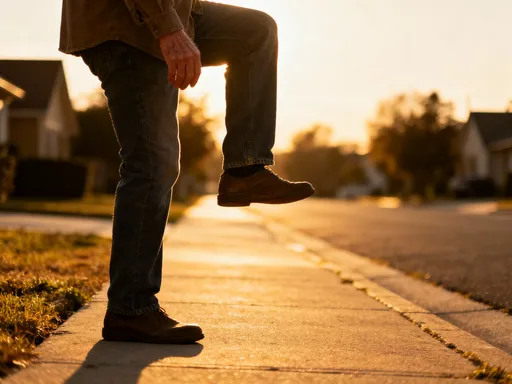
Second, the **single-leg stand** strengthens the ankle, hip, and core muscles while training the brain to maintain upright posture with reduced support. Stand on one leg, keeping the other foot slightly off the ground, and hold for as long as possible. Beginners can start by holding onto a counter or chair, gradually reducing hand support as strength improves. Aim for 20 to 30 seconds per leg, repeating 2 to 3 times daily. This exercise enhances neuromuscular control and builds confidence in weight-bearing. Research indicates that single-leg stance duration is a strong predictor of fall risk, making it both a useful training tool and an informal assessment method.
Third, **seated weight shifts** are ideal for those with limited mobility or joint pain. Sit on a sturdy chair with feet flat on the floor. Slowly shift your weight to the right, lifting the left hip slightly, then shift to the left. Add forward and backward movements to engage the core in multiple directions. This exercise activates the deep stabilizing muscles of the trunk and hips, which are essential for maintaining balance during daily activities. It also improves body awareness and coordination without putting stress on the joints. For added benefit, combine weight shifts with arm movements to challenge the system further. All three exercises are supported by clinical guidelines for fall prevention and balance rehabilitation, making them reliable choices for long-term practice.
Building a Sustainable Routine—Small Steps, Big Impact
The key to lasting balance improvement is integration into daily life. Rather than treating balance training as a separate workout, it’s more effective to weave it into existing habits. For example, standing on one leg while brushing teeth, waiting in line, or drying off after a shower turns idle moments into opportunities for practice. These micro-sessions add up, reinforcing neural pathways without requiring extra time. General physical activity guidelines recommend balance exercises at least three times per week for older adults, but daily practice yields better results. Even two to three minutes a day can lead to measurable improvements over time.
Consistency should not come at the cost of safety. It’s important to start within a safe environment—near a wall, counter, or sturdy piece of furniture—especially for those with a history of falls or medical conditions. Avoid rushing into advanced movements; progression should be gradual. For instance, begin with holding a single-leg stand with two hands on a counter, then move to one hand, then no hands. The goal is steady improvement, not speed. Overexertion can lead to fatigue or injury, undermining confidence and motivation. Listening to the body and respecting limits is part of the process.
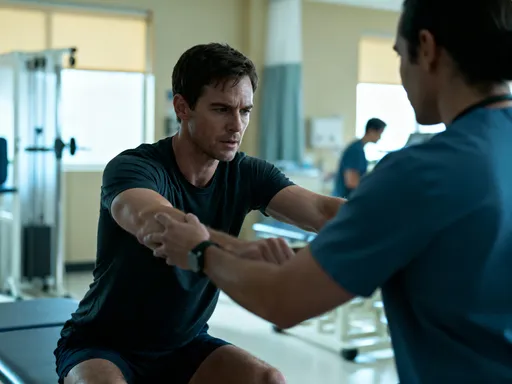
For individuals with diagnosed health conditions such as Parkinson’s, multiple sclerosis, or severe arthritis, professional guidance is strongly recommended. A physical therapist can design a personalized program that addresses specific challenges and ensures proper technique. They may also incorporate tools like balance boards or foam pads to increase difficulty safely. However, for most people, the exercises described here are safe and effective when performed with attention to form and stability. The emphasis should always be on control, awareness, and repetition—not intensity or duration. By making balance training a natural part of daily life, it becomes less of a chore and more of a habit—one that pays dividends in stability, confidence, and independence.
Long-Term Gains: Confidence, Independence, and Health
The benefits of improved balance extend far beyond avoiding stumbles. Over time, consistent practice leads to greater confidence in movement, which encourages more physical activity. People who feel steady are more likely to walk farther, take the stairs, or participate in social outings that involve walking or standing. This increased activity supports cardiovascular health, joint function, and mental well-being. Reduced fear of falling also lowers stress and anxiety, contributing to a more positive outlook on daily life. In this way, balance training becomes a gateway to a more active, engaged lifestyle.
For those managing chronic conditions, maintaining balance is a form of self-care that preserves independence. The ability to dress, bathe, cook, and move around the home safely is fundamental to quality of life. Balance training helps protect these abilities, delaying or preventing the need for assistive devices or caregiver support. It also reduces the risk of injury, which can trigger a downward spiral in health—especially after a fall. By investing in balance, individuals take an active role in their long-term health, aligning with preventive care principles endorsed by healthcare professionals.
Ultimately, balance is not a problem to be fixed but a skill to be nurtured. It reflects the body’s resilience and adaptability, even in the face of aging or illness. The methods that work are not based on trends or unproven remedies but on scientific understanding and real-world application. They require no special equipment, only commitment and consistency. As my own experience shows, small, evidence-based actions can lead to meaningful change. Balance is more than physical stability—it is a foundation for confidence, autonomy, and a life lived with greater ease. By prioritizing it today, we invest in a future where movement remains possible, safe, and full of possibility.